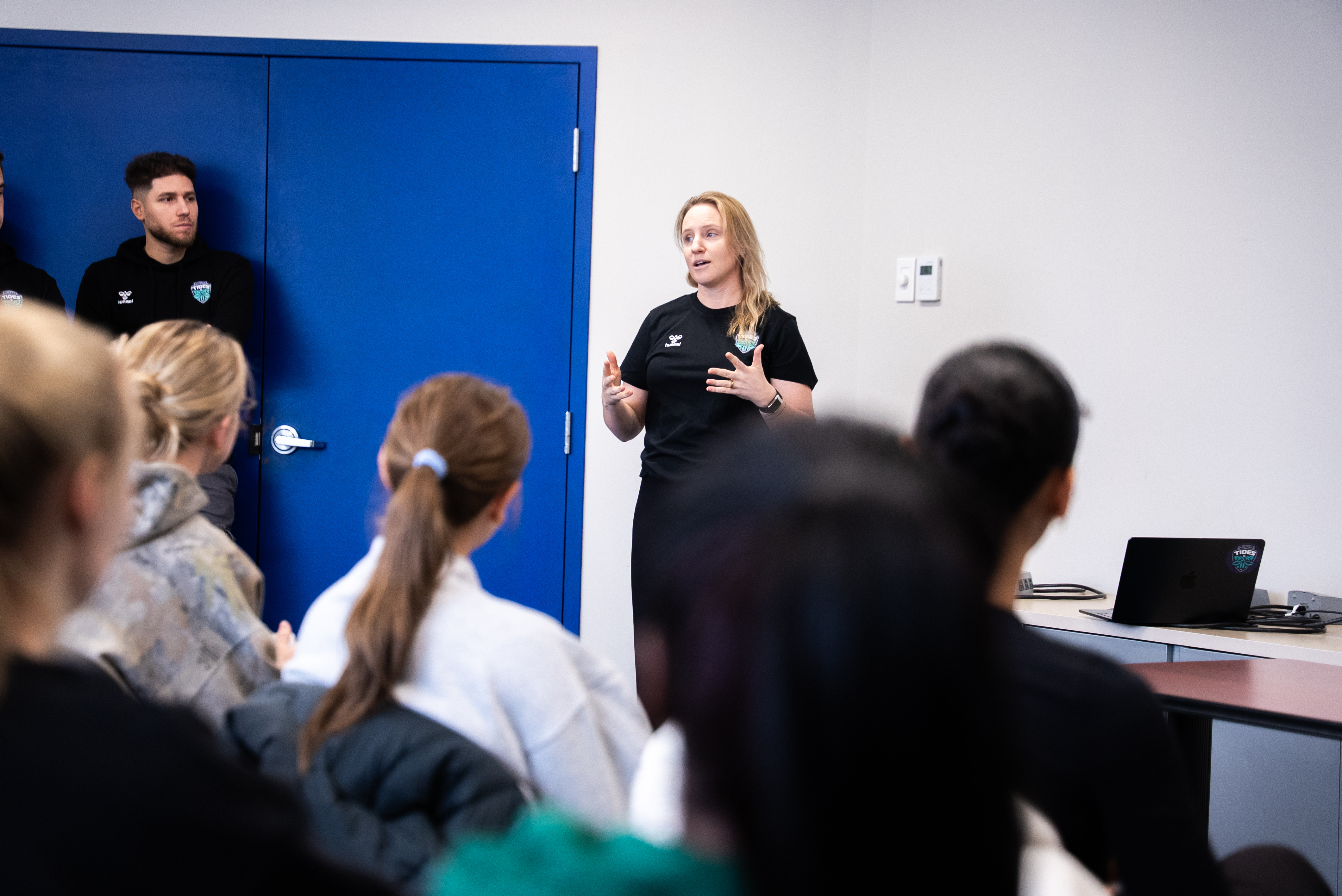
For International Women’s Day 2026, the theme “Give to Gain” celebrates the ripple effect of mentorship, leadership, and support. Ruth Fahy, the new vice president of sporting for Halifax Tides FC, embodies that ethos. Across legal, operational, and performance areas, she brings clarity, structure, and vision to the club, helping the club thrive both on and off the pitch.
We spoke with Ruth about the “soul” of a club, creating pathways for women in football, and how giving your time and expertise can open doors in ways you never expected.
Your work spans legal, operational, and performance areas. How does giving your expertise in different ways shape the standards at Halifax Tides?
Football clubs are complex organizations. Performance on the pitch is influenced by dozens of decisions that happen off it – from contracts, to processes, to how departments communicate with each other.
Because my background spans different environments, I tend to think a lot about structure and clarity. If people understand their roles, the standards expected of them, and how decisions are made, the football side can operate much more effectively.
Ultimately my role is to help create an environment where talented people can do their jobs well, and enjoy their work as much as possible. When the structures behind the scenes are strong, it raises the standards across the whole club.
You’ve said football clubs have a “soul.” What does that look like in your day-to-day decisions?
For me, the “soul” of a club comes from its values and the way people treat each other inside the building. This, to me, is more important than anything.
It shows up in small moments every day – how staff collaborate, how players are supported, how honest conversations are handled when things are difficult. Those things shape the environment just as much as results do.
In practical terms, it means trying to build a culture that is ambitious but also respectful, where people feel accountable to each other and proud to represent the club.
For women looking to build careers in football beyond playing, what pathways are you most intentional about opening?
One thing that’s really important to me is making the football environment visible to people who might not otherwise see it as accessible.
There are so many roles in professional football beyond playing — coaching, analysis, recruitment, operations, sports science, medical, performance. Creating pathways into those areas is critical if the game is going to keep growing.
At a club level that means being intentional about internships, mentorship, and giving people meaningful responsibilities early in their careers (along with the required support structure) so they can develop real experience.
Has there been a time when giving more than expected ended up giving back in unexpected ways?
Earlier in my career in Ireland, I spent a lot of time writing and speaking about women’s football – mostly on a voluntary basis. I would write articles, share analysis, and talk about the women’s game simply because I believed it deserved more visibility and support.
At the time there was no real expectation that it would lead to anything professionally. It was really just about contributing to the growth of the game and helping create more conversation around it.
Looking back, I think those efforts opened many doors in ways I couldn’t have predicted. They helped me build relationships, develop a deeper understanding of the game, and become part of a wider football community. In many ways, those experiences created pathways that ultimately led me to where I am today.
It reinforced something I’ve come to believe strongly – when you give your time and energy to something you care about, opportunities often emerge in ways you never expected.
Why is it important to support other women and girls in sport?
I have been fortunate to come into this role in Halifax having worked across a number of different industries. Since my very first graduate role after college – a project management internship that actually taught me a great deal – I have paid close attention to how female leaders support the people around them.
The best female leaders I have observed share a number of qualities. They are good people first. They are humble, honest and often quite vulnerable in how they lead. They are protective of those in their teams and they never feel the need to compromise themselves out of fear that kindness or empathy will be mistaken for weakness.
What has always stood out to me is that the strongest leaders never build themselves up by diminishing others. They don’t disparage colleagues or create unnecessary competition between women. Instead they create environments where people feel respected, supported and able to grow.
In sport – which can still be a challenging environment for women in many ways — that kind of leadership matters enormously. When women support each other in that way, it doesn’t just help individuals succeed, it strengthens the entire game.
What message would you give to young women about the power of giving as they pursue their dreams?
I think one of the most powerful things you can do in any career is to focus on what you contribute rather than what you receive. If you consistently bring energy, ideas, and support to the people around you, opportunities tend to follow. People want to work with individuals who elevate the environment they’re in.
In sport especially, success is always collective. The people who make the biggest impact are often the ones who are willing to give the most to the team around them.